$7.99
$9.99
50% OFF! Hot items selling fast—Grab them before they're gone!
 Unconditional Satisfaction GuaranteeNo Shipping Fees Above 302 Months to Decide. Returns Simplified.
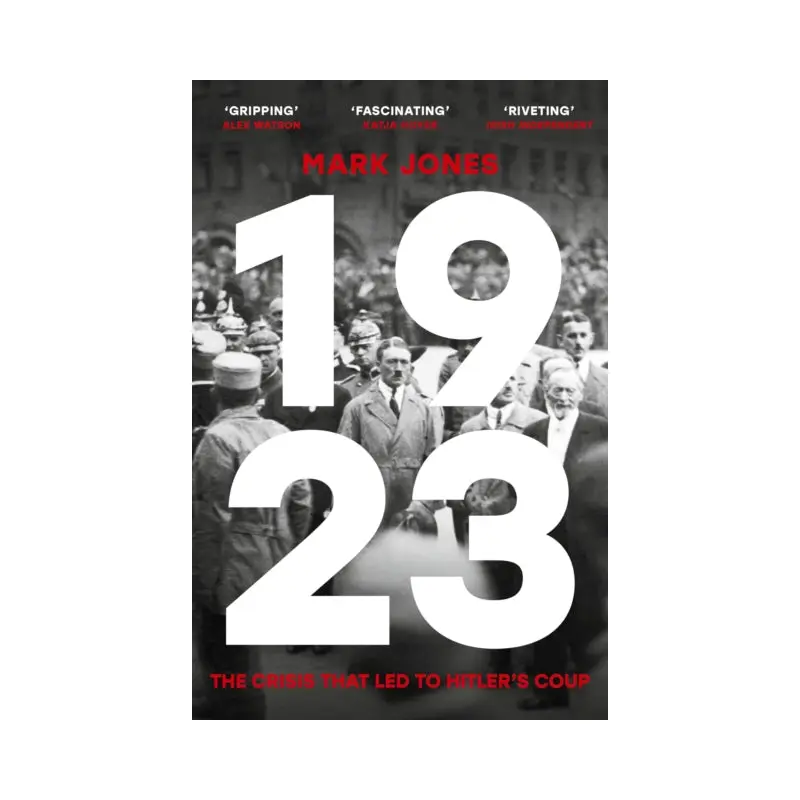
 Author(s): Jones, Mark
Binding: Paperback,
Date of Publication: 18/01/2024,
Pagination: 416 pages,
ISBN13\EAN\SKU: 9781529360745,
Description:
A BBC HISTORY MAGAZINE BOOK OF THE YEAR’Excellent’ Richard Evans’A vivid, crisp, impressively sustained narrative’ Financial Times’Riveting’ Irish Independent’Refreshing and readable’ Irish Times’Gripping . . . thoroughly researched and beautifully written . . . a warning for our times’ Alex Watson, author of Ring of Steel’Fascinating . . . shows powerfully that there was nothing inevitable about the survival of Germany’s young democracy in that year – nor about its death a decade later. A timely reminder’ Katja Hoyer, author of Beyond the WallThe astonishing year when German democracy faced crisis and near destruction.
1923 was one of the most remarkable
years of modern European history. In January, France and Belgium militarily occupied
Germany’s economic heartland, the Ruhr; triggering a series of crises that
almost spiralled out of control. Hyperinflation plunged millions into
poverty. The search for scapegoats empowered political extremes. Hitler’s
populism ascended to national prominence. Communists, Nazis, separatists all
thought that they could use the crises to destroy democracy. None succeeded. 1923 was the year of
Hitler’s first victory – and his first defeat. Fanning the flames of instability,
anti-government and antisemitic sentiment, the Nazis’ abortive yet pivotal
putsch in a Munich beer hall failed when they were abandoned by their
likeminded conservative allies. Drawing on previously unseen sources,
Mark Jones weaves together a thrilling and resonant narrative of German lives
in this turbulent time. Tracing Hitler’s rise, we see how political pragmatism
and international cooperation eventually steered the nation away from total
insurrection. A decade later, when Weimar democracy eventually succumbed to
tyranny, the warnings from 1923 – rising of nationalist rhetoric, fragile European
consensus, and underestimation the of the enemies of liberalism – became only
too apparent.
This account of the republic’s convulsions
and survival offers a gripping image of a modern society in extreme crisis.